Full English Breakfast

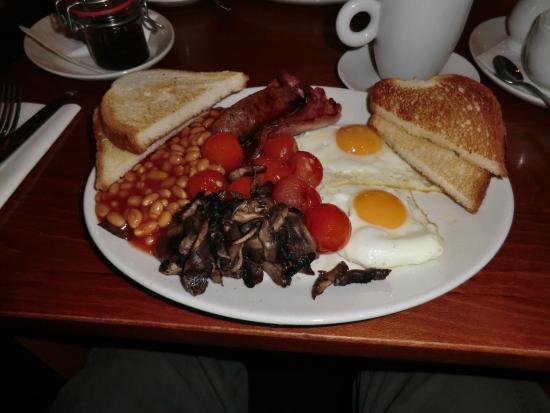
sports-bar-grillI’m just returning from the land of the living dead this morning and trying to remember what it is like to have an appetite after several days of languishing prostrate on the couch and slurping down pomegranate and cherry flavored jello from small plastic containers. Fantasies of real food chunk-full of calories and flavor flit through my mind, although we’re still at the wishing stage here. What comes to mind, should I ever be fit enough to lift a spoon to my parched lips, is a full English breakfast. The traditional fare, includes bacon, poached or fried eggs, fried or grilled tomatoes, fried mushrooms, fried bread with butter, sausages and baked beans, usually served with a mug of tea. As nearly everything is fried in this meal, it is commonly called a “fry-up” or in medical terms, a cholesterol sudden-death killer.

P1000215I have fond memories of my traveling companion bellying up to the bar at the famous Albert Pub on Victoria Street in London, many hours before a pint of ale would be appropriate even in the furthest stretch of one’s imagination, and ordering two such overfilled plates.

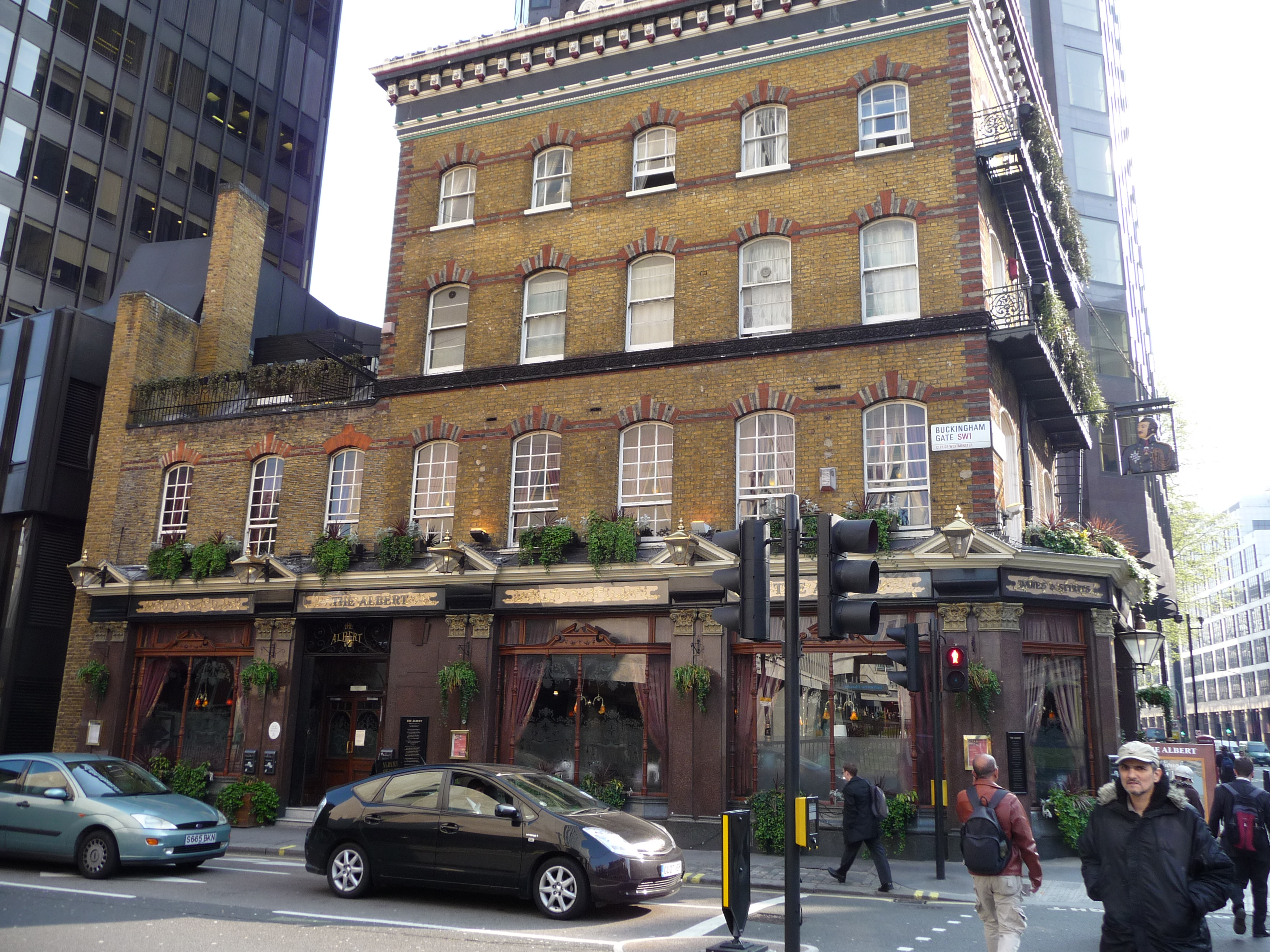
P1000216 - CopyThe Albert is a beautiful Victorian pub was built between 1845 and 1852 and was originally known as ‘The Blue Coat Boy’. It was later renamed the Albert in honor of Queen Victoria’s husband, the Prince Consort. The celebrated carvery restaurant is known to have been frequented by British Royalty, Cabinet Ministers, and Parliamentarians of note. Surviving the Blitz, it stands in its original splendor, boasting original hand-etched glass windows and ornate ceilings, captured so beautifully in this photograph taken from our table.
P1000219All right, enough of this. I’m not going to make it to London this morning. And my, well technically my daughter’s cat, Shadow, is rubbing up against my calf, meowing vociferously, and begging me to throw on some clothes, drag myself to the store, and get him some cat food. Maybe I’ll find something to fry for my breakfast.


Does real conversation matter any more?

scientific americanWaiting in my chiropractor’s office, I picked up the September 2014 Special Edition of Scientific American on Evolution and read a fascinating interview with Sherry Turkle, a Sociologist at MIT. She asked an 18 year old male, “What’s wrong with conversation [vs. emailing]?” He answered, “It takes place in real time. You can’t control what you’re going to say.” Sherry commented that that is why a lot of people like to do their dealings on email–it’s not just the time shifting, it’s that you basically can get it right.

This struck a cord with me and made me think about pros and cons of using email as the ever increasing go-to for all forms of communication.

email typingMany, especially women, feel if they say it JUST RIGHT, that their listeners will better hear their message and behave or respond in a desirable way. Women have always rehearsed their speeches, read self-help books on communication, and sent long hand-written letters when they wanted to get their message across to a spouse, a child, or a boss. Now they email.

sendThe first problem that arises is that email turns even the most socially cautious person into an impulsive blabbermouth. A couple of quick revisions, if that, and our pointer finger hits the SEND button. And no more being able to fish poison-pen letters out of mail boxes with coat hangers. Emailing tends to disinhibit us. We say things in emails, usually off the top of our heads, that we would never say in person or even in a letter. We shout in ALL CAPS, belying our real timid mouse personalities. Our fingers tap out insulting and derogatory words we would never dare spout in public.

imhoThe second problem is that we begin to believe we have a real relationship with the person on the receiving end of our hyperspace missives. But they cannot hear the inflection in our voice or see the smile that says we are teasing, even when our emails are filled with a slew of IMHOs, LOLs, and OMGs. Nor can we see the smirk on their face as our words fall on deaf ears nor the faster than lightning move as they send our precious words to the trash bin hell.

The time delay (even the millisecond delay in instant messaging) prohibits a connection between emotions and words that can be so painful, or even delightful, in real conversation.

monkey keyboardSo with all its limitations and pitfalls, why are we as a nation and a world gravitating to email and similar forms of communication? Why are we allowing a brave new world of technology to degradate the one thing that most defines us a human beings, direct communication. We can teach a monkey to press keys on a keyboard and a remote voice on an iPhone can spout words at us. Sherry Turkle suggests that more and more people would actually settle for a relationship with “Her” of movie fame. Less messy.

I am the first to admit that email has often been the bane of my existence. Yes, I use it for convenience, but I also use it when I’m too fearful to speak the truth, when I think that a dozen revisions will make my words more acceptable or terribly enticing. I use it to force a connection that I know would never fly in person. I use it to circumvent my natural shyness, especially with the opposite sex.

email offendBut instead of making myself clearer, I make myself anathema, offending when not intending to do so, intruding where not welcome, badgering and manipulating, and then sending more emails to try to repair the damage.

What about blogging? Many of the same drawbacks but at least I’m giving you a chance to read or not read my pontifications. Yes, you can delete my emails without reading them. But who ever does that!

stutteringHere’s to real live conversations with all their hesitations, miscues, mumbling and stumbling, stuttering and stammering. Here’s to having a red face, a sweaty brow, and spinach between our teeth. And, most of all, here’s to precarious but precious moments of being human.

Tippi Hedren and Hitchcock’s The Birds

The birds posterI can’t visit Bodega Bay without driving a few miles inland to the hamlet of Bodega, most famous for the filming of Hitchcock’s The Birds.

As usual at this time of year, Tippi Hedren, whose haunting face is shown in the background of the iconic movie poster on the left was at The Tides wharf to sign autographs. 2014-08-31 10.03.05Tippi signing

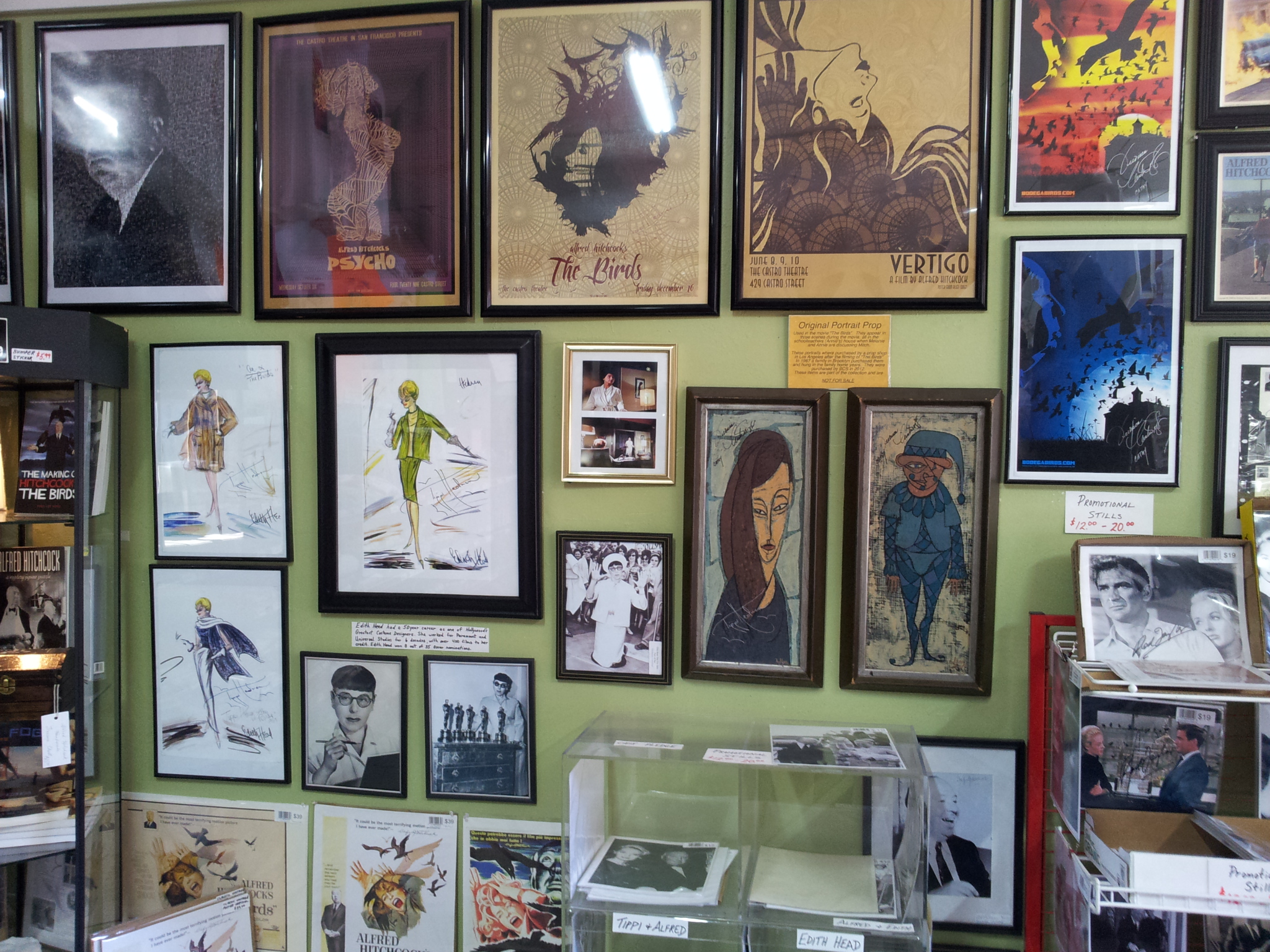
2014-08-31 10.02.27A mannequin of Tippi stands duty at the Bodega Country Store filled with Hitchcock memorabilia.

The walls of the store are covered with artwork, costume sketches, publicity photos from The Birds and from Marnie. An article in the New Yorker chronicles the hidden story behind Hitchcock’s inappropriate advances and retaliation againstTippi and her long-held silence.

I take advantage of a photo op with the man himself, now stuffed and harmless.2014-08-31 10.03.51

The Tides


The Tides restaurant as it appeared in the film. It has since been completely remodeled.

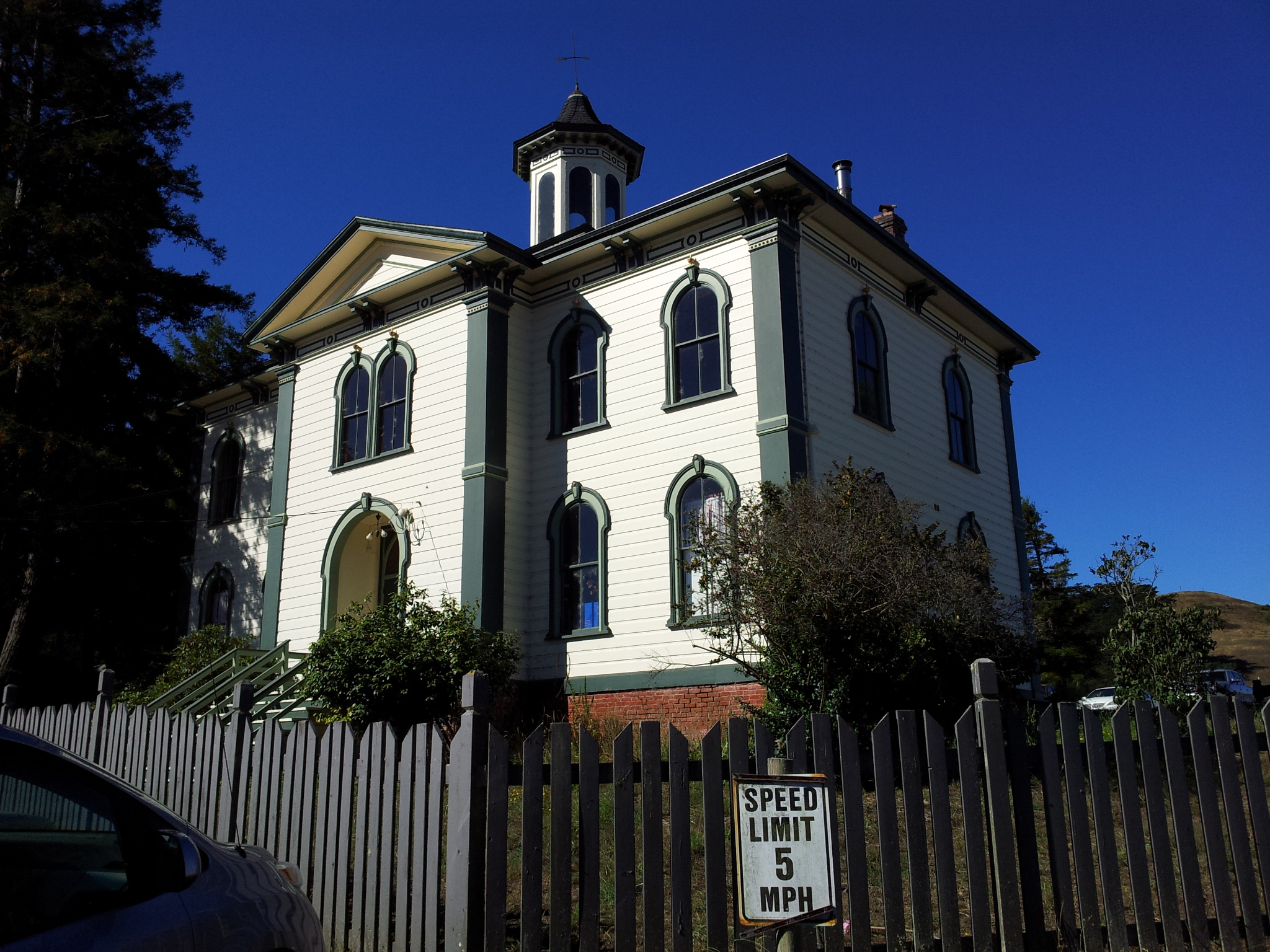
schoolhouse2014-08-31 09.50.15On the left, the schoolhouse as it appeared in the film, site of the memorable scene of the birds chasing the children. I went there several years back on a solitary winter day when suddenly a flock of a hundred or more blackbirds came swarming out of the sky and settled on the tall pines nearby. For a second, I thought I would have to run for my life! But today the schoolhouse in renovated and occupied by a family.

Shake, rattle…and roar!

Gallery

This gallery contains 2 photos.

This year’s Go-Pro Sonoma Indy drivers, staying in local Napa hotels, got quite the wake-up call on race day this past Sunday. At 3:20 a.m. they were jolted out of their beds by the 6.0 earthquake, some grabbing towels to … Continue reading

Amazed by NY Times 1882 story

llewellyn J MorseI was browsing for information about my greatgrandfather, Capt. Samuel Veazie, and his ship, the Llewellyn J. Morse, and came across a true story of murder and suicide that concerned the prior Capt. of that historic ship (which starred in the role of Old Ironsides in the silent film of 1926). So amazing to see details about both Capt. Ames and his wife (the ship being named after her father, a member of the Maine legislature). I have posted the verbatim account from the NY Times of May 10, 1882 as a page on my author website.

I absolutely loved the level of detail in the article, the ship’s cargo of sugar and hemp, the description of Mrs. Ames as “one of the loveliest women in Maine”, the location of the pistol-shots, the “north” and “south” positions of the bodies in the bed. As a psychologist, I was fascinated with a possible cause for Capt. Ames “insane” behavior. The article mentions a liver disorder and sudden alarming symptoms of mental aberration. Could it have been end stage alcoholism with delirium tremons that drove him to his last desperate act? Journalism at this personal, detailed level, so common in Victorian days, no longer exists.

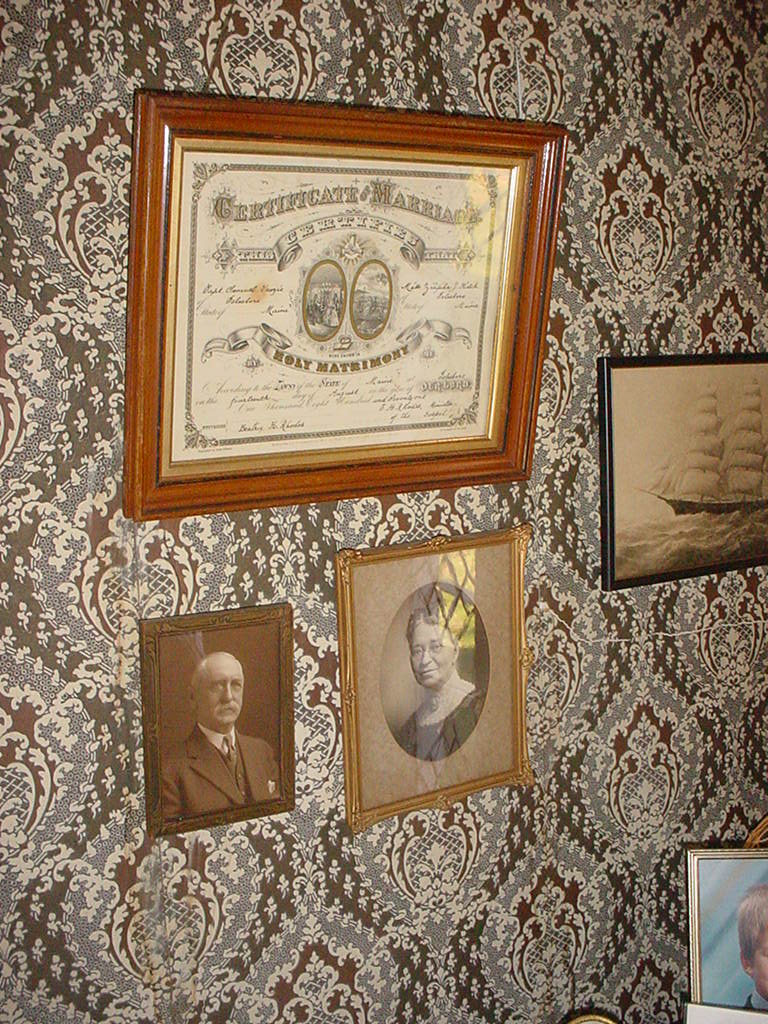
DSC02326Regardless, from what I’ve learned about my family history, my greatgrandfather probably become Captain of the Llewellyn J. Morse immediately after Capt. Ames’ untimely demise. I wonder if the crew, having been abandoned by their former Captain in the Philippine Islands, were fearful that yet another quite mad Down Easterner had taken the helm? This is a photo of him next to one of his wife Zilpha plus a photo of the ship and their marriage license. All on the wall of the home he built on the island of Islesboro in the middle of Penobscot Bay in Maine. Memorabilia from his many sea journey’s fill the home, now owned by one of my cousins.

Beautiful bits of flotsam and jetsam


Very often it’s not the grand vistas but the intricate details that are most remembered from our travels. Enjoy this array of exquisite bits of flotsam and jetsam from my travels in England and France.

DSC_0582

A swan at Versailles

DSC05578

The “Thinker” gargoyle at Notre Dame

DSC_0890

Two gargoyles’ view of Paris

DSC01959

Chenonceau through a window

DSC01991

The kitchen at Chenonceau

DSC01759

Drain pipe at Chambord

DSC01738

Opera costumes at Chambord

DSC01447

Egyptian cats at the Louvre

DSC01408

MIniatures of Paris in shop on Ile St. Louis

DSC01304

Pont D’Alexandre Paris

DSC01183

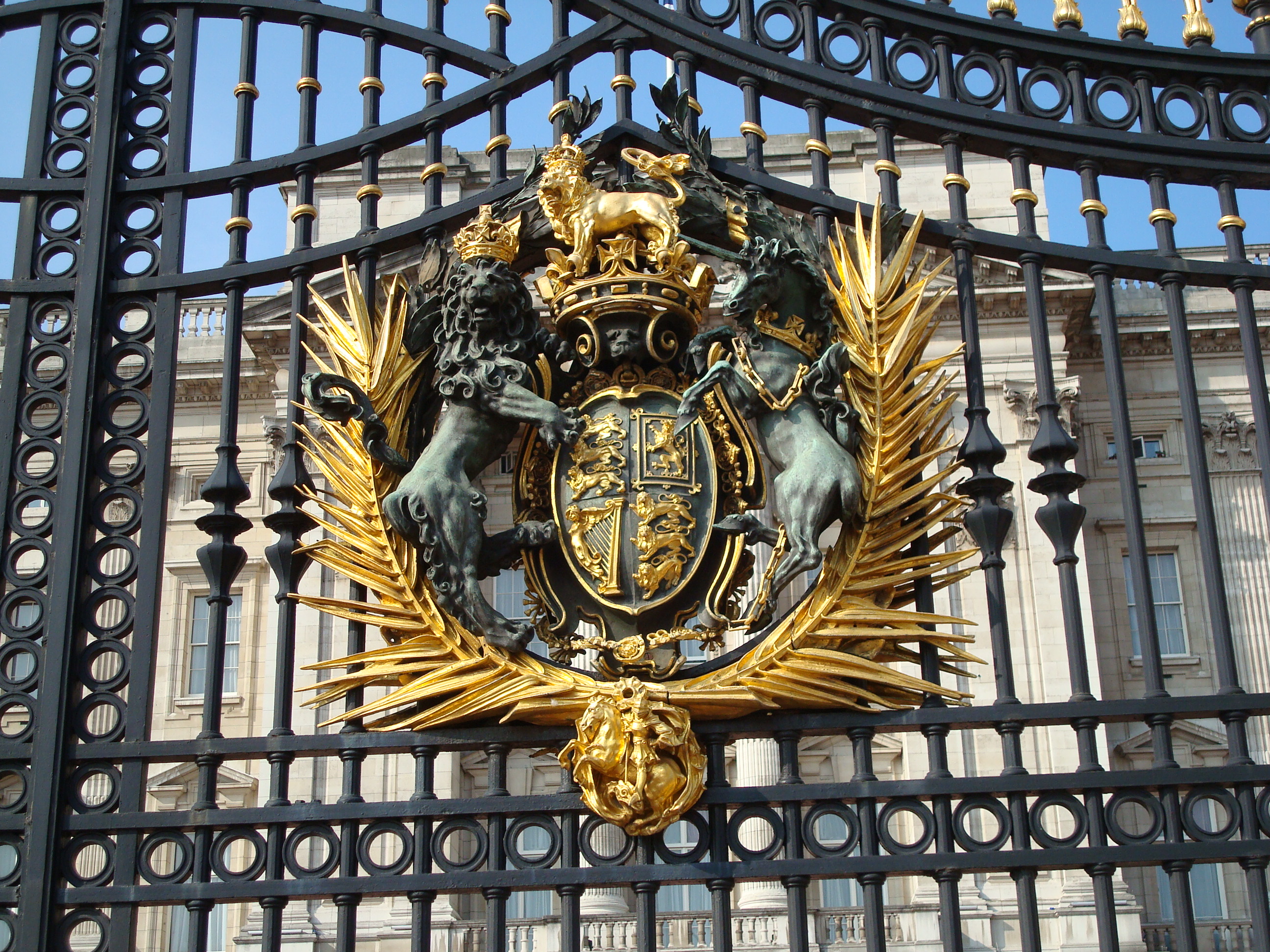
Buckingham Palace

DSC01139

Near Buckingham Palace

P1000217

And ending on a yummy note…the Albert Pub in London. See you there!

Desperately seeking…beta readers!

I have just finished a complete revision of MOTHER TONGUE, changing the protagonist to a child advocate attorney and using the first-person voice to add punch. I’d love feedback, especially from readers who have commented on prior versions.I have posted a portion of the First Chapter on my website.

If this story of a child advocate attorney who gets blown out of the water when one of her young clients is kidnapped and murdered and ends up seeking refuge in Paris as a translator, only to find herself caught up in the Corsican separatist movement and yet another child kidnapping, then contact me and offer to be a beta reader.

MOTHER TONGUE is finished and almost ready for publication. I’d love your input. It will appeal to readers of suspense novels that have romance and thriller elements, such as Anne Patchett’s State of Wonder.

Thoughts on HELL-o and GOOD-bye

good byes hellosIt occurred to me as I watched a dear friend say a final good-bye to a beloved son that good-byes are rarely “good” and often deeply painful. The etymology of this common form of farewell comes from godbwye (1570s), itself a contraction of God be with ye traced back to the late 14th century. The French adieu has a similar origin from the phrase a dieu vous commant translated I commend you to God. And if we had kept the original meaning in current parlance, maybe it would feel both “good” and “Godly” when a good-bye is heard.

But such is not always the case. Many good-byes feel like good riddance with good luck thrown in for good measure. The most painful good-byes in my life have been abrupt, unexpected, and have come from the lips of those I had most trusted. I’m sure I am not alone in considering these good-byes as unfair and unwarranted.

goodbye winnie the poohWhat would it take to consider all those moments of abandonment by those we love as “good” or “Godly”. “Good” is probably the hardest concept to conjure up. But sometimes we are blessed with new wisdom down the road that changes our perception and allows us to see the “good” in those farewells and we find ourselves down on our knees saying a thousand thank yous. “Godly” is a bit easier. Since I readily admit that I don’t know what is best for me and that a power greater than myself does, I can trust that the acceptance of a painful good-bye will eventually be mine regardless of how many tears have been shed. I can trust in the promise that God will not send me off on any path, even the ones that I myself have mis-chosen, that is outside His realm of care. Not that these good thoughts don’t occasionally disappear in moments of regret and self-pity.

helloHello’s sometimes seem equally misnamed, at least those that have led us into relationships that have brought more misery than happiness. Those hello’s that slip out in a moment of infatuation or greed or inattention. That probably should have been a “hell-no” instead.

say hello to goodbyeI realize, of course, that we attach our own meaning to these greetings as life is lived, as battles are won and lost, as we mature or hang on to childish notions. To see a hello or good-bye unadulterated by life’s traumas, we only have to turn to our grandchildren, especially in their toddler years. When their eyes fill with delight at our coming and with tears at our departure, when they hurl their little bodies across the room to grab our knees in greeting or to try to keep us from leaving, when kisses are blown with pudgy little hands or slobbery kisses wet our cheeks, we know in our souls that there is no hell in hello and that good-byes are made up of a zillion chunks of pure love.

My mid-year resolution is to learn to say hell-no when I need to and to try to find “good” in every good-bye I’ve ever been blessed to hear.

Life Interrupted

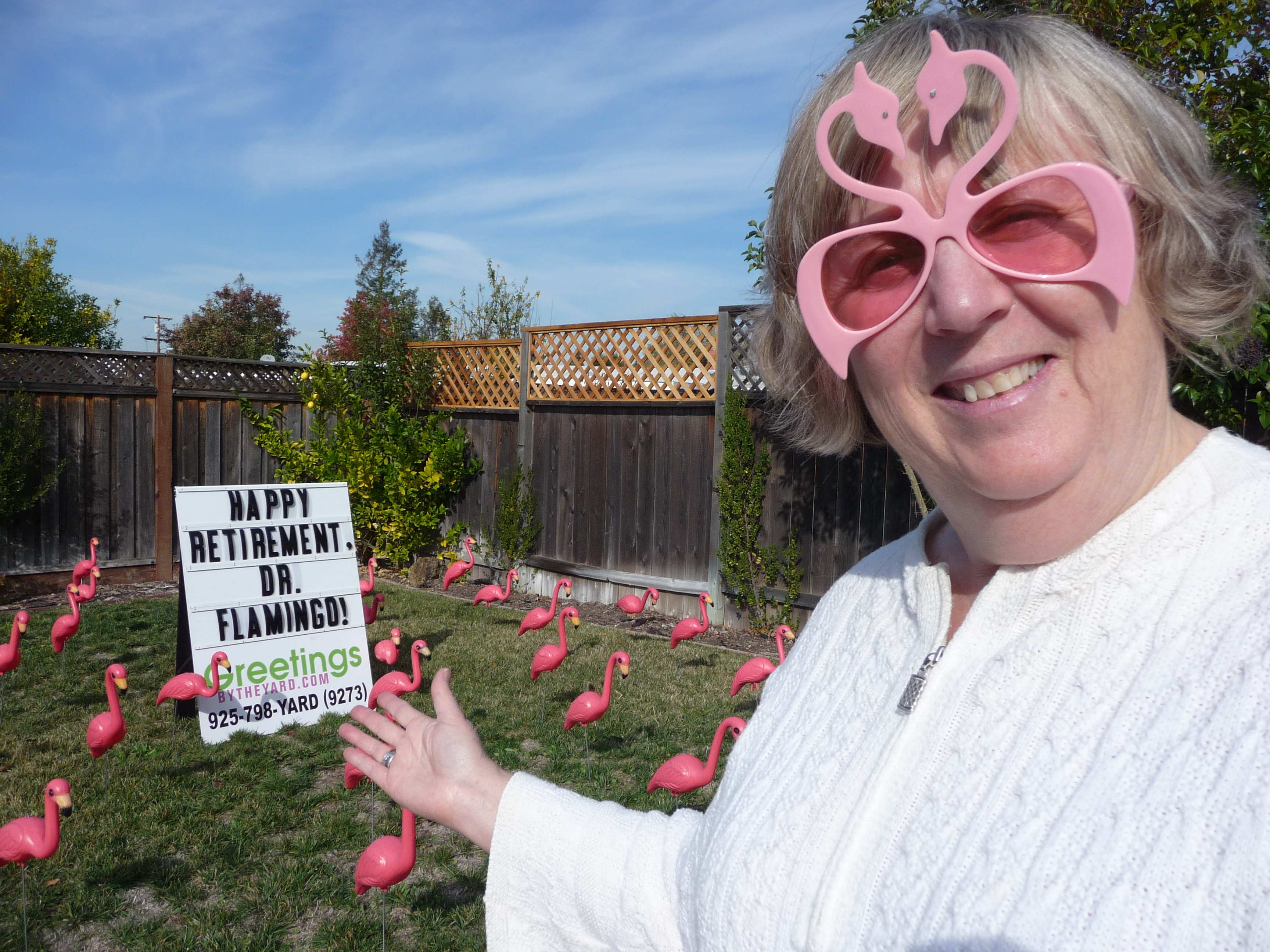
P1010462I retired FOR GOOD four and a half years ago (the 100 flamingos in my yard were proof of that) after a forty-year career as a Clinical Psychologist. That’s eight thousand patients and tens of thousands of hours of listening to the basic seven stories of humankind: bad spouse or partner, bad job, bad kids, lousy childhood, maltreatment, bottom of society’s totem poles, or spiritual vacuum. But each retelling had its own flavor or its own horrors (just when you think you’ve heard the worst!) and the resilience of the human soul is a marvel to observe. Give it a place to flourish and flourish it will.
I turned my attention and my time toward being a loving grandparent and to fiction writing. I enjoyed putting the final touches on my second novel, MOTHER TONGUE, and developing a social media campaign to sell the first, DEGREES OF OBSESSION. How different the market has become for self-published authors. I even created a book trailer, which brought out the “director” in me.

And then my stellar work history caught up with me. A former colleague gave my name to a large heath care plan that services the Medi-Cal (Medicaid) population in 14 northern California counties. They were seeking someone with clinical experience and organizational skills (which I had obtained through leadership in my union) to serve as their Mental Health Director. Two days a week seemed doable and the lure of having a paycheck again, and a handsome one at that, led me to applying and then accepting the position.

So the plan is to sort out the new position, see what I can contribute to serving the Medi-Cal population in terms of mental health services, and run the Grammie and fiction writing “businesses” on the side. Who knew that entering the eighth decade of my life would be so invigorating and challenging. And I can always quit after I earn enough money to buy that Alfa Romeo Spider Veloce I’ve been hankering after!