♥ ♥ ♥ ♥ ENJOY WATCHING BOOK TRAILER ♥ ♥ ♥ ♥
Click on COVER to BUY at KINDLE STORE at Amazon.com
♥ ♥ ♥ ♥ ENJOY WATCHING BOOK TRAILER ♥ ♥ ♥ ♥
Click on COVER to BUY at KINDLE STORE at Amazon.com
In the past two months, I learned to Tweet and Retweet, use Pinterest, and Blog. In the process, I created an entirely new Author Website using WordPress.com, learning all the ins and outs of a new web builder.
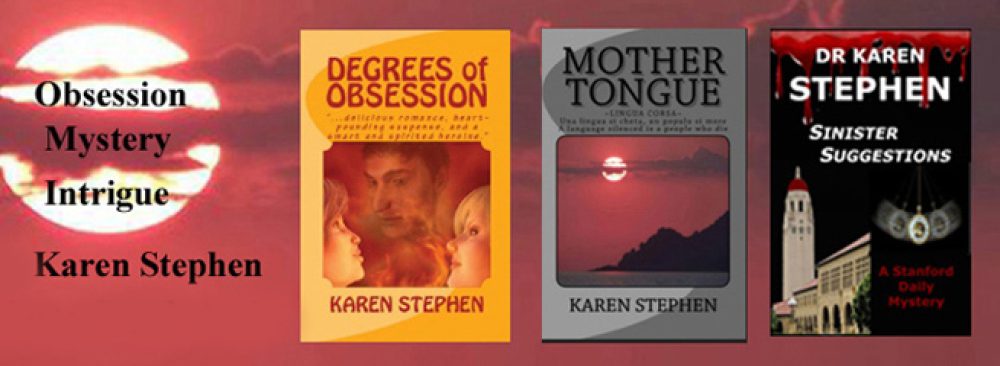
Then I published a Kindle version of my first novel, DEGREES OF OBSESSION, which is still available in paperback as well, and began a social networking marketing campaign using tons of good advice I garnered at a local meeting of the Romance Writers of America back in January.
I even figured out how to make a Book Trailer for DEGREES OF OBSESSION mastering the basics of Movie Maker 6.0 after discovering that Microsoft’s Window Live Movie Maker isn’t worth a farthing! I will be releasing the trailer this weekend March 22nd. Be sure to stay tuned!
Although my computer chair has become my best friend during this rush of activity, I still keep up with babysitting my toddler and pre-school granddaughters a couple of days a week, keep up with the activities of two older grandsons in Oregon, stay involved in church activities, see friends, feed my face (never forget THAT unfortunately!), walk, and do my daily mediation writing. Whew!
Who says turning 70 has to slow you down, mentally or physically. In fact, I find it terribly exciting to learn and use new skills. It is also great fun in this second career of mine as an author of romantic suspense novels to hold the actual products of my handiwork in my hands and have them appreciated by others. One of the downsides of being a therapist for forty years was seldom seeing the outcomes of my efforts as people drifted back into their lives after getting what they needed from therapy.
Yes, there have been a few senior moments here and there. But they usually involve forgetting to mail the bills or pick up bananas for those grandkids.
Grow old with me! The best is yet to be. ~Robert Browning.
 Captain Samuel Veazie (1844-1923) was my paternal great-grandfather, pictured here with his wife Zilpha underneath their marriage certificate on the front entrance wall of the family home he built on Islesboro in the middle of Maine’s Penobscot Bay. The traditional Maine-style home with its attached barn still stands and is being tenderly maintained by one of my cousins.
Samuel was the first Captain of the Llewellyn J Morse and sailed it around the seven seas. Later it became part of the Star Fleet of the Alaska Packing Association, bringing canned salmon from Alaska to their dock in the Oakland Estuary.
 This archival photo shows the Llewellyn J. Morse just after it had broken through the ice of the Bering Sea in 1923 (coincidentally the same year Samuel died). In its third incarnation, the ship became a famous film star, playing the “role” of the USS Constitution in the acclaimed 1926 silent film Old Ironsides. A clip of the battle scene from the film is available on YouTube.
 But the most treasured family artifact, in my view, is the actual book cabinet Capt. Samuel took on each of his many voyages, holding his original collection of classics, history, and the novels of his day.
 From a Common School Grammar to the works of Racine, from The Scarlett Letter to Lorna Doone, from the Aneid of Virgil to the Man in the Iron Mask, from Don Quixote to the Household Physician.
 I feel I have come honestly by my love for the sea and my love of books and am so grateful that his legacy has been preserved down through the generations. I hope to have a many successful incarnations as the Llewellyn J Morse!
To hone my craft and just have fun, I have taken many classes at The Writing Salon, founded in 1999 by Jane Underwood as a school of creative writing for adults (beginners to advanced). The Writing Salon offers small classes held in comfortable, cozy settings complete with fresh-brewed coffee, tea and snacks in both San Francisco and the East Bay (Berkeley). I have taken a variety of classes from their wide selection from fiction writing to screenwriting to poetry. Each class is small enough to ensure intimacy and individual attention. They also offer classes in personal essays, memoir, play writing, travel writing, food writing (chocolate and erotica not to be missed!), publishing and much more!
 But certainly the most fun I had was taking a class on how to write a KQED Perspective from Jesse Loesberg who is a regular contributor to the Perspectives series on KQED-FM in San Francisco. Upon completion of the class, I sent my Perspective entitled JUST ONE? to KQED and was invited to come to their radio studio in San Francisco to record it. After many takes, the recording engineer assured me that we had a winner. And within a few days, I turned on my radio in the car on the way to work and felt my heart go into overdrive as they played my piece. Here is the actual recorded version from the KQED audio archives. JUST ONE?
The delightful photo above is from the Goddess of Adventure Blog. The author lists 5 top advantages to dining alone. I agree and have found dining alone in France or Britain or anywhere but America is quite the delightful experience. They really do have tables set for one!
Or play here:
In the mid 1990s when I first got the notion to write a fictional account about Corsica, I asked a colleague of mine, who visited France often, if he knew anything about the island that would provide a source of dramatic conflict in my novel. He asked if I had seen the State Department travel warnings mentioning numerous bombings, attacks, and assassinations connected with the Corsican Nationalist movement, although they were careful to point out that no tourists had ever been harmed. I began my search for more information about the situation by perusing a copy of Liberation, the radical French newspaper, where I found articles by Guy Benhamou, the premier journalist covering the Corsican situation at that time. I wrote him (these were pretty much pre-internet, pre-email times) and received back copies of his articles in French and a lovely letter wishing me well in my writing endeavors.
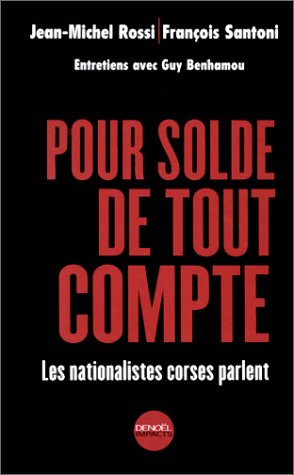 In the year 2000, that same journalist authored a book, Pour Solde de Tout Compte: Les nationalistes corses parlent, which essentially was a “final accounting” byJean-Michel Rossi and François Santoni, the most predominate of the movement’s rival leaders. Both suggested that even the Corsican rebels were weary of the fight for independence, and of the corruption and crime which that fight had engendered.
  Within a year both of these men had been assassinated and Guy and his family were put under police protection. This photo shows Santoni as one of Rossi’s pallbearers prior to his own death.
The conflict is not over. In 2012 alone there were twelve assassinations on the island, all related in some fashion to the ongoing conflict between separatist factions. In my novel, I touch on some of the themes of the Nationalist movement as it existed back in 1996 but, as an outsider and as a writer of fiction, I do not pretend that my portrayal is at all accurate or fair to any of the parties involved. It’s as if a foreigner were writing about our American Revolution, in which my own ancestors took part. I can only pray that through the struggles of my fictional characters, readers will understand a bit more about the political and social struggles of Corsica’s Nationalists, especially their goal to preserve the Corsican language, lingua corsa, and that they will get a glimpse of the overriding beauty of the island, its fascinating customs and history, and the courage and determination of its people.
 Through the centuries, Corsicans have withstood many invaders, often by taking to the maquis. My hope would be that they would tolerate and forgive the invasion of this American author into their customs and conflicts.
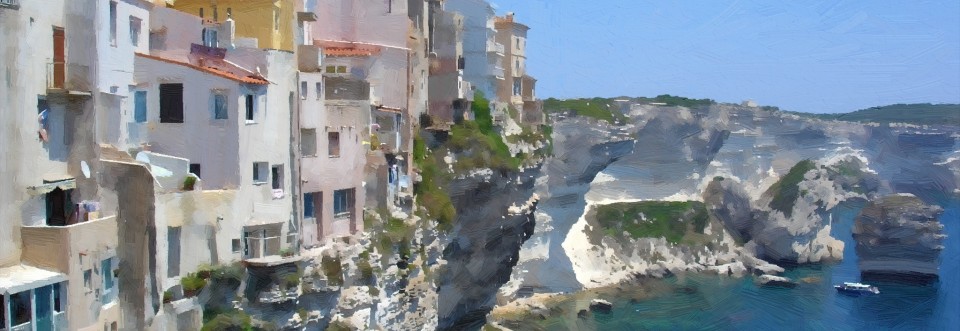
The cliffs of Bonifacio, birthplace of MOTHER TONGUE
Fiction is delivered into the world, much like babies, in one of two ways. It is born naturally, accompanied by the pangs of hard labor, from the depths of an author’s imagination or cut from the world’s belly in the form of an unforgettable adventure.
My own such adventure began on a spring afternoon in 1963, incubated in a white Victorian two blocks off Telegraph Avenue in Berkeley, where three sorority cast offs shared space with one transferee from Stanford. The latter would be moi, who moved in after a rash decision that only an eighteen-year-old with a broken heart can make.
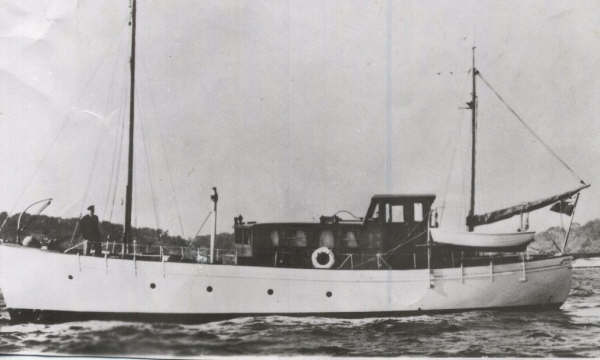 The wacky idea? Round up a bunch of students from California colleges, charter a yacht, and sail around the Mediterranean. I was the only taker and certainly the only one whose mother would have paid for such a dubious plan.
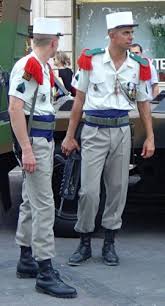 At the end of our adventure, more of which will be revealed later, we found ourselves stranded in Bonifacio, Corsica for five days while a mistral storm raged on, sending six more modern and less sturdy yachts to Davy Jones locker. Not a single inhabitant spoke to us—it was still the ugly American days—until two young Foreign Legionnaires approached and begged us to sneak them off the island. Our devious plot was foiled by a snitch among the crew, and we endured an hour’s dressing down by the Captain.
The next day we were surprised and delighted when the two Legionnaires present us with a gift for at least trying to liberate them. I will never forget my first glimpse of that stunning Corsican dagger, its blade inscribed with a Corsican proverb. That image turned first into a screen play and many iterations since into MOTHER TONGUE. The protagonist, Liz Fallon, is conceived during a reminiscent five day stay in Bonifacio and thus MOTHER TONGUE, the novel, was born.

 Dr. Karen Stephen aka Doc Flamingo