
In the mid 1990s when I first got the notion to write a fictional account about Corsica, I asked a colleague of mine, who visited France often, if he knew anything about the island that would provide a source of dramatic conflict in my novel. He asked if I had seen the State Department travel warnings mentioning numerous bombings, attacks, and assassinations connected with the Corsican Nationalist movement, although they were careful to point out that no tourists had ever been harmed. I began my search for more information about the situation by perusing a copy of Liberation, the radical French newspaper, where I found articles by Guy Benhamou, the premier journalist covering the Corsican situation at that time. I wrote him (these were pretty much pre-internet, pre-email times) and received back copies of his articles in French and a lovely letter wishing me well in my writing endeavors.
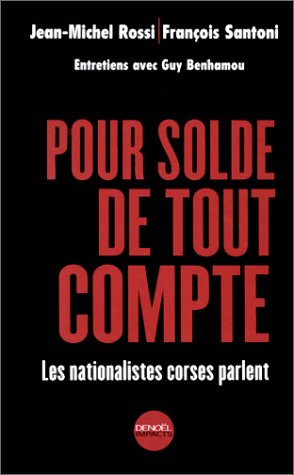 In the year 2000, that same journalist authored a book, Pour Solde de Tout Compte: Les nationalistes corses parlent, which essentially was a “final accounting” byJean-Michel Rossi and François Santoni, the most predominate of the movement’s rival leaders. Both suggested that even the Corsican rebels were weary of the fight for independence, and of the corruption and crime which that fight had engendered.
  Within a year both of these men had been assassinated and Guy and his family were put under police protection. This photo shows Santoni as one of Rossi’s pallbearers prior to his own death.
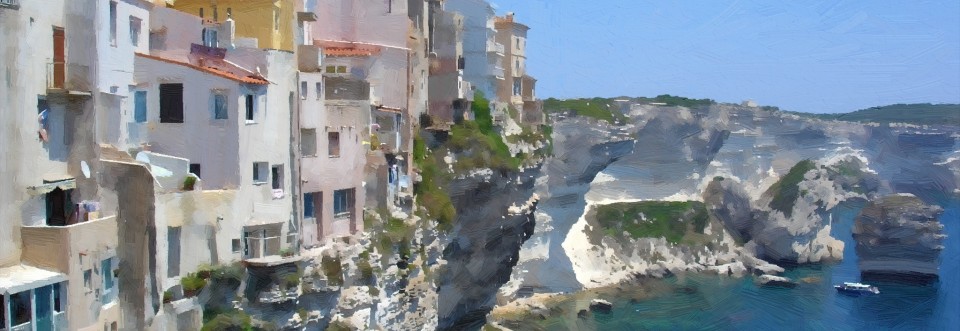
The conflict is not over. In 2012 alone there were twelve assassinations on the island, all related in some fashion to the ongoing conflict between separatist factions. In my novel, I touch on some of the themes of the Nationalist movement as it existed back in 1996 but, as an outsider and as a writer of fiction, I do not pretend that my portrayal is at all accurate or fair to any of the parties involved. It’s as if a foreigner were writing about our American Revolution, in which my own ancestors took part. I can only pray that through the struggles of my fictional characters, readers will understand a bit more about the political and social struggles of Corsica’s Nationalists, especially their goal to preserve the Corsican language, lingua corsa, and that they will get a glimpse of the overriding beauty of the island, its fascinating customs and history, and the courage and determination of its people.
 Through the centuries, Corsicans have withstood many invaders, often by taking to the maquis. My hope would be that they would tolerate and forgive the invasion of this American author into their customs and conflicts.

 Dr. Karen Stephen aka Doc Flamingo